
Picture Hanging for Large Artwork: How to Get the Layout, Spacing, and Placement Right
September 7, 2026
You have found the right piece of artwork. Now comes the decision that can make it look intentional—or strangely disconnected from the rest of the room: exactly where should it go?
Picture hanging for large artwork involves more than finding the horizontal center of an empty wall. The artwork needs to relate to the furniture, ceiling height, viewing distance, doors, lighting, and other features around it. Its weight and hanging system also need to be appropriate for the wall.
For homeowners and property managers, getting these details right before installation can prevent unnecessary holes, visible patchwork, and a finished layout that still feels slightly off.
Why Large-Art Placement Matters So Much
An oversized painting, framed print, canvas, or multi-panel arrangement naturally becomes a focal point. Small placement errors are therefore more noticeable. Artwork that is a few inches too high may seem to float above the furniture. A piece that is too low can make a console or sofa area feel crowded.
Good placement creates a visual relationship between the artwork and the objects around it. It can make a ceiling feel taller, anchor a long wall, balance a large piece of furniture, or give an entryway a clear point of interest.
Placement also affects practical use. Large frames should not interfere with door swings, curtains, thermostats, wall controls, or everyday walking paths. In rentals and commercial spaces, thoughtful positioning can make the room look finished without overwhelming future furniture layouts.
Start With the Room, Not Just the Wall
A common mistake is centering artwork on the entire wall when it should be centered relative to the furniture below it. In a living room, for example, the visual center may be the sofa rather than the drywall area between two corners. Over a dining console, the console usually provides the more useful reference point.
Before settling on a location, consider:
- The finished width, height, and weight of the framed artwork
- The dimensions and position of the furniture below it
- Nearby windows, doors, wall controls, shelves, and architectural details
- The primary viewing position when someone enters or uses the room
- Whether the furniture arrangement is permanent or likely to change
- The wall surface and the hanging hardware supplied with the piece
This room-first approach is especially valuable in open floor plans, where one long wall may serve multiple zones. The artwork should usually belong visually to one defined area instead of being centered across the entire open space.
Useful Height and Spacing Guidelines
Eye-level placement is a helpful starting point, but it is not an inflexible rule. A frequently used design reference places the center of artwork around 57 to 60 inches from the floor. That can work well on an open wall, but artwork above furniture needs to be evaluated as part of a combined composition.
Artwork above a sofa, bed, or console
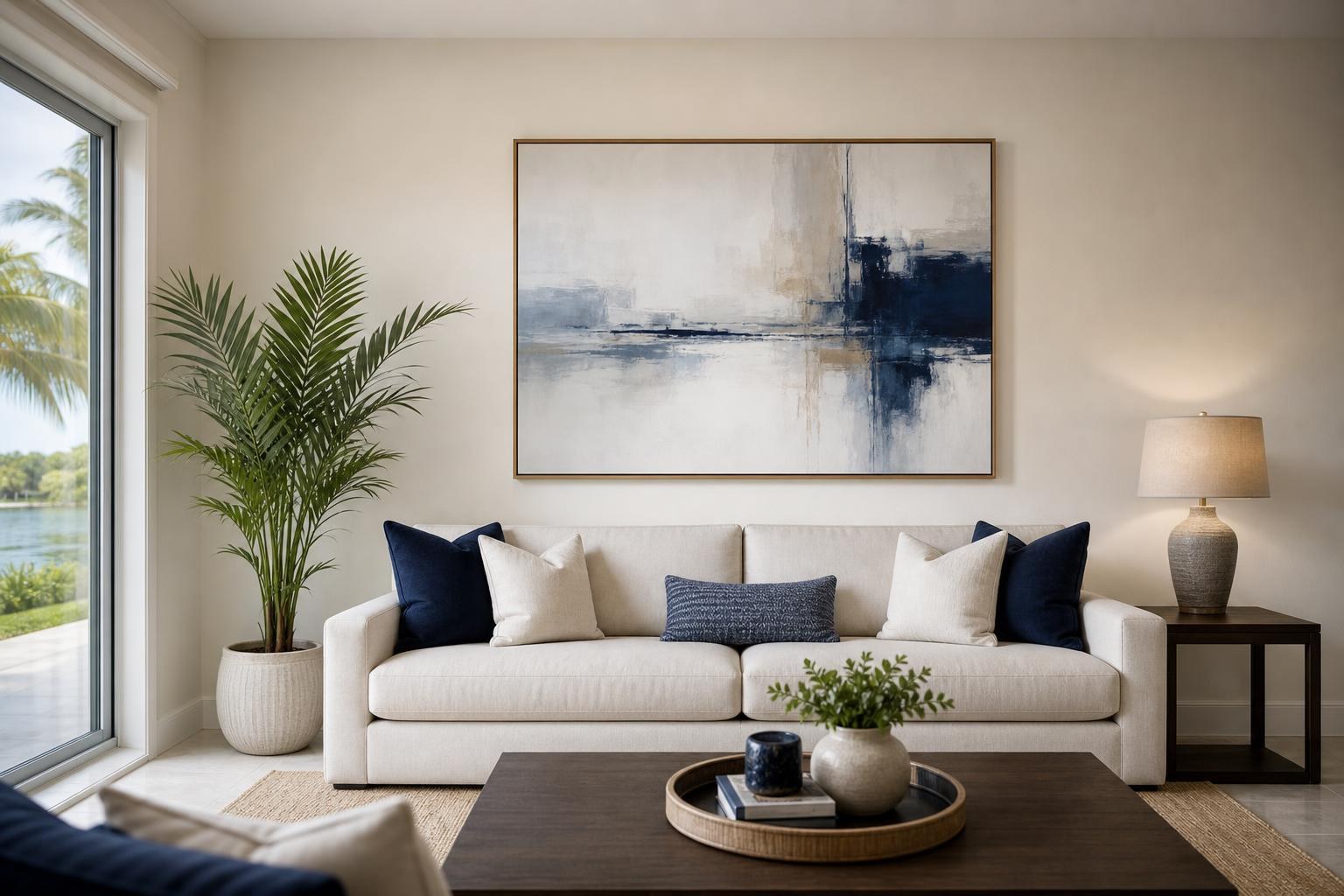
In many rooms, leaving approximately 6 to 10 inches between the furniture and the bottom of the frame creates a connected appearance. The exact spacing depends on the artwork’s size, the furniture height, decorative objects on the surface, and the ceiling.
The artwork should also have enough width to visually hold its own above the furniture. A narrow frame over a broad sectional may look undersized, even if it is technically centered. Conversely, a frame extending almost to the furniture edges can make the arrangement feel cramped.
Pairs, triptychs, and grouped artwork
A multi-piece installation should be planned as one overall composition. Consistent gaps—often a few inches—help separate the panels without making them look unrelated. The best spacing depends on the frame thickness, image design, and total wall area.
Planning the combined outer dimensions before anything is hung also prevents the group from drifting too far left, right, up, or down. This is one reason professional picture hanging services can be particularly helpful for triptychs and symmetrical arrangements.
Why Heavy or Oversized Artwork Is Different
Large artwork creates installation concerns that lightweight decor does not. The frame may be awkward to lift, the hanging points may need exact alignment, and the wall material may affect which mounting approach is appropriate. A mounting method suitable for a small framed photo should not automatically be assumed suitable for a large wood frame or substantial canvas.
Wall construction can also vary from room to room and property to property. Central Florida homes may have different interior wall assemblies depending on the home’s age and construction. A handyman should evaluate the wall, the artwork, and the supplied hanging system rather than relying on a one-size-fits-all solution.
Very tall placements introduce access and handling concerns as well. If a piece must be positioned over stairs, above a tall entry, or in another difficult-to-reach location, mention that when requesting a quote. Some locations may require a different project plan or may not be suitable for standard handyman service.
Common Placement Mistakes That Lead to Rework
Most disappointing installations are not caused by dramatic errors. They come from small planning decisions that only become obvious after the artwork is on the wall.
- Hanging the piece too high: This creates an awkward gap between the artwork and nearby furniture.
- Centering on the wrong reference: The wall’s center may not match the sofa, bed, desk, or dining area.
- Ignoring the frame’s visual weight: A dark, thick frame can feel larger than a frameless canvas with the same dimensions.
- Planning each panel separately: Multi-piece art needs a shared centerline and consistent spacing.
- Overlooking room activity: Doors, curtains, chairs, and walking paths can affect a seemingly open location.
- Choosing placement before arranging furniture: Moving the sofa later may leave the artwork visibly off-center.
If previous attempts have left unwanted holes or damaged drywall, those areas may need attention before the final installation. USA Handyman Pros also handles drywall patching and wall repair when the project calls for a cleaner surface.
What Affects the Cost of Professional Picture Hanging?
Picture-hanging prices vary because the work involved can differ substantially. Hanging one accessible canvas is not the same project as laying out a five-piece arrangement or positioning a heavy frame above a tall console.
Common pricing factors include the number of pieces, finished dimensions, approximate weight, frame and hanging-system design, wall surface, installation height, accessibility, and layout complexity. Removing existing decor, patching old holes, or completing paint touch-ups can also change the project scope.
A clear quote request should include a photo of the artwork’s front and back, its measurements, approximate weight if known, and a wide photo of the intended wall. Photos showing the full room are more useful than close-ups because they reveal furniture, ceiling lines, doors, and other visual references.
How to Prepare for a Picture-Hanging Appointment
Finalize the furniture layout before the appointment whenever possible. Clear fragile objects from the nearby floor and furniture, and make sure the artwork is available at the property. Keep any manufacturer-provided hardware or installation information with the piece so it can be evaluated.
Property managers and renters should also confirm placement approval before work begins. If the owner has restrictions concerning wall attachments or acceptable locations, sharing them in advance helps avoid last-minute changes.
If you are still comparing two possible walls, send photos of both. An installer can then understand the options and discuss practical considerations before the final placement is selected.
Consider the Entire Wall Finish
Large artwork often highlights the condition and design of the wall around it. Scuffs, mismatched touch-up paint, abandoned holes, or uneven patches may become more noticeable once a focal piece is installed.
This can be a good time to coordinate cosmetic wall work or consider whether the artwork belongs on a more distinctive background. A painted feature area, decorative panel treatment, or professionally planned custom accent wall can give oversized artwork additional depth without filling the room with more decor.
The order of work matters. Wall repairs, painting, and finish updates should generally be completed before the final hanging appointment so the artwork does not need to be removed and reinstalled.
Professional Picture Hanging in Central Florida
USA Handyman Pros serves homeowners, rentals, property managers, and businesses across Marion, Levy, Citrus, Alachua, and Orange counties, along with nearby Central Florida communities. Professional help is especially useful when the piece is oversized, the layout includes multiple panels, or you want to avoid trial-and-error placement.
To receive project-specific pricing, gather the artwork dimensions, wall photos, location details, and any related repair or finishing needs. You can request an instant quote or book USA Handyman Pros online when you are ready to plan your installation.
Ready to Get the Project Off Your To-Do List?
From furniture assembly and TV mounting to drywall repair, painting, pressure washing, accent walls, shelves, pictures, mirrors, and other approved handyman projects, USA Handyman Pros can help you turn the list into finished work.
USA Handyman Pros
(352) 462-0943
Project scope, materials, access, surface conditions, travel, availability, and final pricing can vary. Starting prices are not final quotes. Work requiring a licensed trade professional is outside the scope of this automated handyman content.