
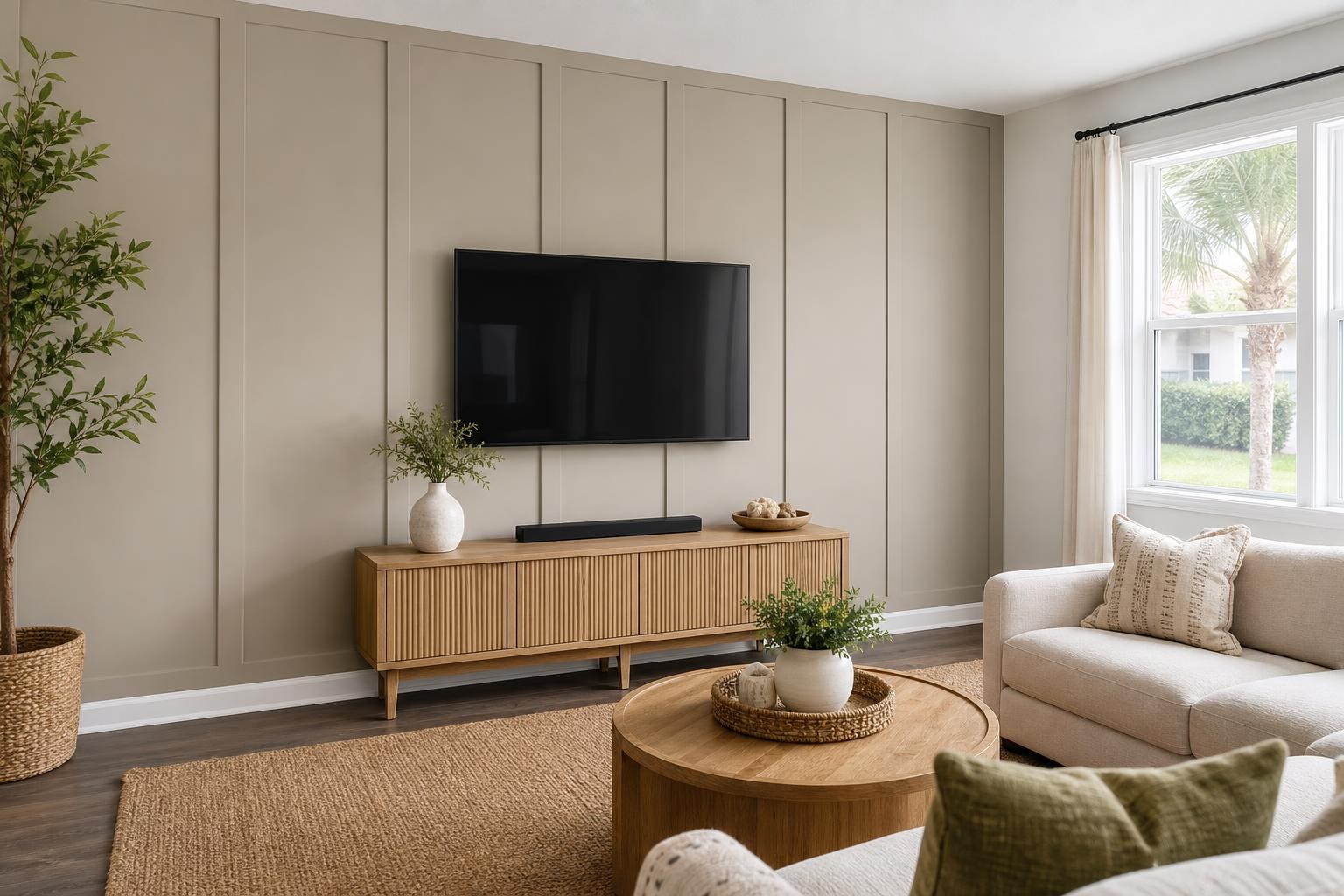
Modern Wall Panel Accent Walls: How to Make a Statement Without Overdesigning the Room
September 10, 2026
You want the room to feel finished, not busy. That is the real decision behind most wall-panel accent wall projects: how do you create a noticeable focal point without letting the treatment overpower the furniture, television, artwork, or architecture?
The answer usually is not adding more detail. It is choosing the right wall, establishing a clear visual hierarchy, and matching the panel design to the room’s scale. Before requesting a quote, it helps to narrow down the look, understand what affects pricing, and identify any wall conditions that could change the scope.
Start With the Room’s Main Focal Point
An accent wall works best when it reinforces a focal point the room already needs. In a living room, that may be the wall behind the television or sofa. In a bedroom, it is often the headboard wall. Dining rooms, entryways, home offices, and reception areas can also benefit from paneling when the selected wall is clearly visible upon entering.
Avoid choosing a wall simply because it is empty. Consider how the wall relates to doorways, windows, built-ins, furniture placement, and the normal viewing angle. A dramatic design on a secondary wall can make the entire room feel visually off-balance.
For television walls, decide early whether the finished plan will include professional TV mounting, a soundbar, floating shelves, or media-cable concealment. These elements affect panel spacing and alignment. Planning them after the decorative layout has been established can create awkward gaps or force unnecessary changes.
Choose One Strong Design Idea
Rooms tend to look overdesigned when several competing ideas appear on the same surface. A wall with narrow vertical slats, multiple paint colors, floating shelves, oversized artwork, and decorative lighting may have individually attractive elements but no clear visual priority.
A more polished approach is to choose one defining feature and let the remaining pieces support it. Common wall-panel directions include:
- Vertical slats: Create rhythm and can make a room feel taller. They suit contemporary living rooms, bedrooms, offices, and media walls.
- Picture-frame molding: Provides a tailored, traditional appearance that works well in dining rooms, bedrooms, hallways, and formal living spaces.
- Simple geometric trim: Adds movement and dimension, although restraint is important in smaller rooms.
- Board-and-batten-inspired panels: Offer clean architectural structure and can cover a partial or full wall.
- Wide rectangular panel layouts: Produce a quieter modern look with fewer lines and less visual activity.
If the furniture, rug, and artwork already have strong patterns, a simple panel layout is usually the better choice. If the room is minimal and neutral, the wall can carry more texture or contrast.
Use Scale to Keep the Wall From Feeling Busy
Panel dimensions should relate to the wall rather than being copied directly from an inspiration photo. A layout designed for a wide living room may feel cramped on a narrow bedroom wall. Likewise, very small trim details can disappear across a large wall or create more seams and intersections than the room needs.
Pay attention to the wall’s width, ceiling height, baseboards, door trim, windows, outlets, and any furniture that will remain in front of it. A bed, console, or sectional can hide the lower portion of a carefully planned design. A mounted television may interrupt the central pattern.
Before settling on a layout, identify which lines will remain visible once the room is furnished. The best design is not necessarily the most intricate one; it is the one that still looks intentional in everyday use.
Coordinate Color, Texture, and Sheen
Wall panels do not need a high-contrast color to make an impact. Painting trim and wall surfaces in one color creates subtle dimension through light and shadow. A contrasting color produces a stronger focal point, while natural or wood-look slats introduce warmth and texture.
Consider the room in both daylight and evening light. Very dark walls can feel sophisticated, but they may dominate a compact space or reveal dust more readily. Highly reflective finishes can emphasize every joint and surface variation. Softer sheens often create a calmer result, although the right finish depends on the room and desired maintenance level.
If surrounding walls need refreshing, coordinating the panel project with full-room painting can help the new feature wall feel integrated rather than added as an afterthought. USA Handyman Pros lists full-room painting from $200+, with final pricing based on project details.
Check the Wall Before Finalizing the Design
Decorative panels do not automatically hide every wall problem. Uneven surfaces, peeling paint, old patchwork, dents, texture differences, or damaged drywall can affect how trim and panels sit against the wall. Glossy paint, wallpaper, or heavily textured surfaces may also require additional preparation.
Look at the wall from an angle under natural light. Note visible waves, cracks, stains, loose material, or previous mounting holes. Cosmetic wall issues may be addressed through appropriate drywall patching and wall repair before the decorative work begins. Drywall repair currently starts from $150+, with final pricing varying by the damage and required finish.
If staining or deterioration suggests an active leak, moisture problem, structural concern, or another issue outside normal cosmetic preparation, that underlying condition should be evaluated by the appropriately qualified professional before panel installation.
What Affects the Cost of a Custom Accent Wall?
USA Handyman Pros lists custom accent walls from $1,199+. That is a starting price, not a universal price for every wall. Final pricing depends on the design, materials, wall condition, finish, and related work included in the project.
Important pricing factors generally include:
- Overall wall width and ceiling height
- Panel or trim style and layout complexity
- Number of corners, openings, and design interruptions
- Existing wall texture and required cosmetic preparation
- Material selection and finish requirements
- Whether painting or touch-ups are included
- TVs, shelves, artwork, or soundbars that must coordinate with the layout
- Accessibility around large furniture or occupied work areas
A simple, evenly spaced treatment on a clear wall is different from a detailed media wall that must align with several mounted components. Sharing the entire room plan at the quoting stage helps prevent separate design decisions from conflicting later.
Details and Photos That Help With a Quote
Useful quote photos show more than a close-up of the wall. Take one straight-on image, one photo from farther back that includes the surrounding room, and additional images of corners, outlets, windows, baseboards, visible damage, or existing wall-mounted items.
Include approximate wall width and height, your preferred style, paint or finish expectations, and whether furniture will remain in the room. Inspiration photos are helpful, but clarify what you like about each image. It may be the spacing, color, texture, or overall mood rather than an exact copy of the design.
Property managers should also mention whether the unit is occupied, whether the wall must withstand frequent turnover, and whether a repeatable design is being considered for multiple rooms or properties. Renters should confirm that the property owner permits a fixed decorative wall treatment before booking.
What to Prepare Before the Appointment
Finalize the major placement decisions before work begins. Confirm which furniture will return to the wall, where the television or artwork will sit, and whether shelving is part of the finished design. Remove small décor and personal items from the immediate area, and provide enough room to access the wall safely.
If you are uncertain between two layouts, discuss that during the quote process rather than waiting until materials are being positioned. A little planning protects the proportions of the design and helps keep the room from accumulating too many visual elements.
Plan a Wall That Still Looks Good After the Trend Changes
A modern statement wall should improve the room even when the furniture, artwork, or décor changes. Clean spacing, an appropriate scale, and a controlled color palette generally age better than an overly complicated pattern built around one temporary styling choice.
USA Handyman Pros serves homeowners, rentals, property managers, and businesses across Central Florida, including Marion, Levy, Citrus, Alachua, and Orange counties and nearby communities. To discuss a custom wall-panel project, review the custom accent wall service, then request a quote or book online. You can also call (352) 462-0943 with project questions.
Ready to Get the Project Off Your To-Do List?
From furniture assembly and TV mounting to drywall repair, painting, pressure washing, accent walls, shelves, pictures, mirrors, and other approved handyman projects, USA Handyman Pros can help you turn the list into finished work.
USA Handyman Pros
(352) 462-0943
Project scope, materials, access, surface conditions, travel, availability, and final pricing can vary. Starting prices are not final quotes. Work requiring a licensed trade professional is outside the scope of this automated handyman content.