
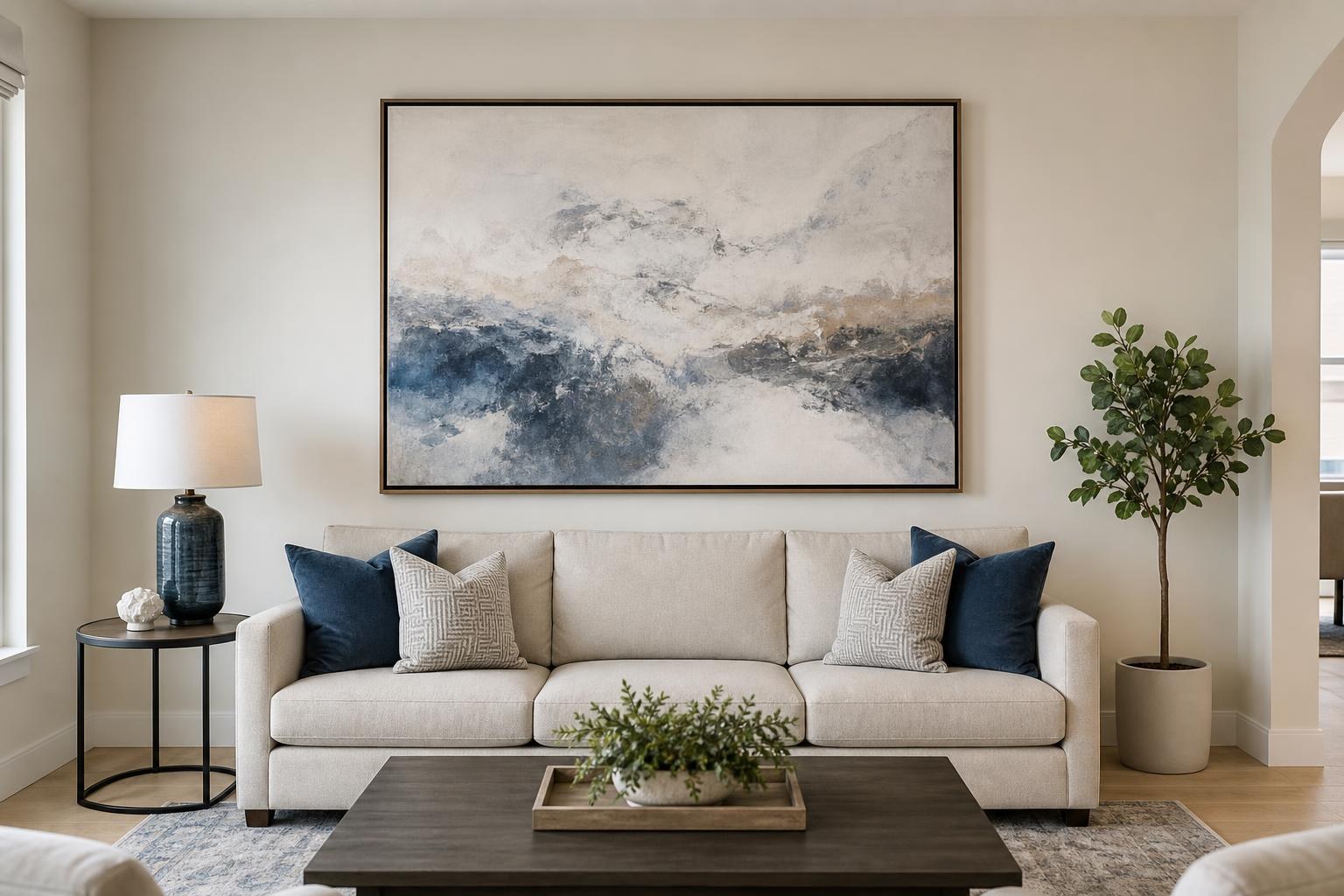
Hanging Oversized Art Above a Sofa, Bed, or Console: What to Plan Before Installation
September 20, 2026
You have the artwork, the furniture is in place, and the wall looks ready. The difficult decision is whether the piece should move higher, lower, or slightly off center—and whether the wall and hanging system are suitable for its size and weight.
That decision becomes more important with oversized art. A small placement error can make a large piece feel disconnected from the room, while an unsuitable attachment point may leave the installation less secure than expected. Before booking an oversized artwork hanging service, it helps to evaluate the full wall, the furniture below it, and the physical details of the piece.
Start With the Furniture, Not the Empty Wall
Large artwork is usually part of a furniture grouping. It may sit above a sofa, bed, sideboard, console, desk, or reception-area credenza. Although the wall provides the mounting surface, the furniture establishes the visual boundaries.
A piece centered on the wall may look noticeably off when the sofa below it is positioned closer to one side of the room. In many cases, centering the artwork over the furniture creates a more intentional result than centering it between two corners.
The same principle applies when hanging art above a bed. The bed, headboard, nightstands, lamps, and ceiling height work together as one composition. Above a console, the arrangement may also need to account for table lamps, decorative objects, thermostats, switches, or nearby doorways.
Before the appointment, decide which element should control the layout: the wall, the furniture, an architectural feature, or the overall room. If you are unsure, provide a wide photo showing the complete area rather than a close-up of the proposed mounting spot.
How High Should Oversized Artwork Hang?
There is no single measurement that works in every room. Viewing height matters, but so do the dimensions of the piece, the height of the furniture, the depth of a headboard, and the amount of open wall above the installation.
The goal is usually to make the artwork feel visually connected to the furniture without creating a cramped appearance. A large gap can make the piece appear to float independently. Too little separation may cause the art to compete with pillows, lamps, accessories, or people seated below it.
Placement should also reflect how the room is used. Art viewed primarily while standing in an entry or office may need a different visual position than a piece viewed from a seated living-room arrangement. Bedrooms with tall headboards require additional planning because the visible wall begins higher than it does above a low platform bed.
Rather than relying on one generic height rule, evaluate the complete arrangement from the main viewing locations. For an open-concept Central Florida home, that might include the living area, kitchen, and entry. In a furnished rental, the most important view may be the first one guests see when they enter.
Scale Determines Whether the Piece Feels Intentional
Oversized does not necessarily mean too large. A substantial piece can make a long wall feel finished and reduce the need for several smaller decorations. Problems arise when the artwork has no clear relationship to the furniture or leaves the surrounding wall visually unbalanced.
Consider these details when evaluating scale:
- The width of the artwork compared with the sofa, headboard, console, or desk below it
- The amount of open wall on each side of the piece
- The height of nearby doors, windows, shelves, and wall-mounted devices
- Whether lamps or accessories will overlap the artwork visually
- How the frame color and thickness relate to the room’s other finishes
A single wide canvas may suit a low sofa, while a tall statement piece may work better in a stair landing, entry, or room with higher ceilings. When several panels form one image, the full outside dimensions and spacing between panels must be considered together.
Weight, Frame Construction, and Hanging Hardware Matter
Two pieces with the same dimensions can have very different installation requirements. A stretched canvas may be relatively light, while framed art with glass, a wood backing, or a substantial decorative frame can be much heavier.
The back of the piece is just as important as the front. Hanging points may include D-rings, wire, brackets, cleats, or manufacturer-provided hardware. Their condition and location affect how the piece sits against the wall and whether it can be positioned where you want it.
Do not estimate weight based only on appearance. Check the product information if it is available, or provide a reasonable estimate when requesting a quote. For custom, antique, unusually heavy, or high-value pieces, mention that information before the appointment so the project can be evaluated appropriately.
Wall material can change the installation plan
Drywall, masonry, paneling, tile, and accent-wall materials do not all accept the same attachment methods. The desired position may also place the hanging points near a stud, away from framing, or over a decorative wall treatment.
A clear quote request should identify the wall material if known. Photos are especially useful in Florida homes where block construction, drywall assemblies, and remodeled wall surfaces may vary from room to room.
If the intended area has crumbling drywall, previous anchor damage, loose material, or a poorly patched section, that condition should be addressed before hanging a large piece. USA Handyman Pros also handles approved drywall patching and wall repair when the project calls for cosmetic surface correction.
Common Placement Problems to Resolve Before Booking
A professional-looking installation depends on more than making the frame level. Several room details can limit the preferred position or make the appointment more complicated if they are discovered after arrival.
- Furniture has not reached its final location: Moving the sofa or bed later can leave the artwork visibly misaligned.
- The frame blocks a wall device: Thermostats, switches, controls, and vents should remain unobstructed.
- Window glare affects the view: Glass-covered pieces may reflect bright windows or overhead lighting.
- Doors or cabinets enter the area: Swing paths and furniture clearances need to be considered.
- The artwork arrives without suitable hanging points: Share a photo of the back so the mounting arrangement can be reviewed.
- Access is restricted: Stairwells, tall foyers, narrow hallways, and furniture that cannot be moved can affect project scope.
Renters and property managers should also confirm any property rules concerning wall attachments. For furnished rentals, documenting the approved location can help keep artwork placement consistent between turnovers.
What Affects the Cost of Hanging Large Artwork?
Picture-hanging quotes are influenced by project scope rather than dimensions alone. A single lightweight canvas on an open drywall surface is different from a heavy framed piece over a tall headboard or a multi-panel arrangement requiring precise spacing.
Common pricing factors include the number of pieces, dimensions, approximate weight, wall material, hanging hardware, installation height, access, furniture that must be carefully worked around, and whether layout assistance is needed. Wall repair or touch-up work would also expand the scope.
For a more useful quote, send a wide photo of the wall, a straight-on photo of the artwork, a photo of its back and hanging points, overall dimensions, approximate weight, wall material if known, and the service address. Mention whether the furniture is already in its permanent position.
If several rooms or units are involved, property managers can organize photos by room or unit number. A simple list showing each piece’s dimensions and intended location makes the scope easier to understand.
When Professional Picture Hanging Is Worth Considering
Hiring help is particularly useful when the artwork is difficult for one person to handle, the frame is valuable or fragile, the layout involves multiple panels, or the location requires careful alignment with furniture and architectural features.
Professional installation can also reduce uncertainty when you have one opportunity to place a prominent piece correctly. Repeatedly changing the position can leave unnecessary holes and turn a straightforward decorating project into wall repair and touch-up work.
USA Handyman Pros serves homeowners, renters, businesses, and property managers across Marion, Levy, Citrus, Alachua, and Orange counties and nearby Central Florida communities. Service is focused on non-regulated handyman projects, including artwork, mirrors, wall decor, and related room-finishing work.
Prepare the Room for a Smoother Appointment
Place the artwork near the installation area, but keep it protected until the appointment. Remove small decorative items and provide reasonable access to the wall. If possible, settle the final furniture arrangement first and identify the main viewing position.
You do not need to make every placement decision in advance. However, having a preferred general location—and sharing complete project details—makes it easier to discuss a balanced result without relying on guesswork.
Ready to plan your oversized artwork installation? Use the instant quote form to share photos and project details, or book USA Handyman Pros online. You can also call (352) 462-0943 to discuss your project.
Ready to Get the Project Off Your To-Do List?
From furniture assembly and TV mounting to drywall repair, painting, pressure washing, accent walls, shelves, pictures, mirrors, and other approved handyman projects, USA Handyman Pros can help you turn the list into finished work.
USA Handyman Pros
(352) 462-0943
Project scope, materials, access, surface conditions, travel, availability, and final pricing can vary. Starting prices are not final quotes. Work requiring a licensed trade professional is outside the scope of this automated handyman content.