
Getting a Handyman Quote in Crystal River: Build a Clear Project Brief Before You Book
October 10, 2026
You may know exactly what you want fixed, mounted, assembled, or refreshed. The challenge is communicating the project clearly enough for a handyman to understand its real scope before arriving.
That matters whether you are planning work in your Crystal River home, coordinating a rental turnover from another city, or preparing several improvements for a seasonal property. A vague request such as “mount a TV and repair a wall” usually leads to follow-up questions. A short, organized project brief can reduce that back-and-forth and help you receive a quote based on more complete information.
You do not need professional drawings or a lengthy inspection report. You need the right combination of photos, measurements, product information, site conditions, and priorities.
Start With a Room-by-Room Project List
Before taking photos, walk through the property and make one list organized by room or area. This prevents small items from being added through scattered messages and helps clarify whether the work is one focused project or a bundle of unrelated tasks.
A practical list might look like this:
- Living room: Mount a 65-inch TV, mount the soundbar, discuss media-cable concealment, and hang two framed pieces.
- Guest bedroom: Assemble a bed frame and dresser from unopened cartons.
- Hallway: Patch two wall holes and touch up the repaired area.
- Entry: Replace an existing lock with a customer-supplied smart lock that does not require new wiring.
- Patio: Request pressure washing for the concrete seating area.
This format gives the handyman a useful overview while making it easier to identify which services can reasonably be grouped. Homeowners and property managers can review additional project categories on the Citrus County handyman services page.
Take Wide, Medium, and Close-Up Photos
One tight photo often shows the defect but hides the conditions around it. For each project, take a small set of images from different distances.
Wide room view
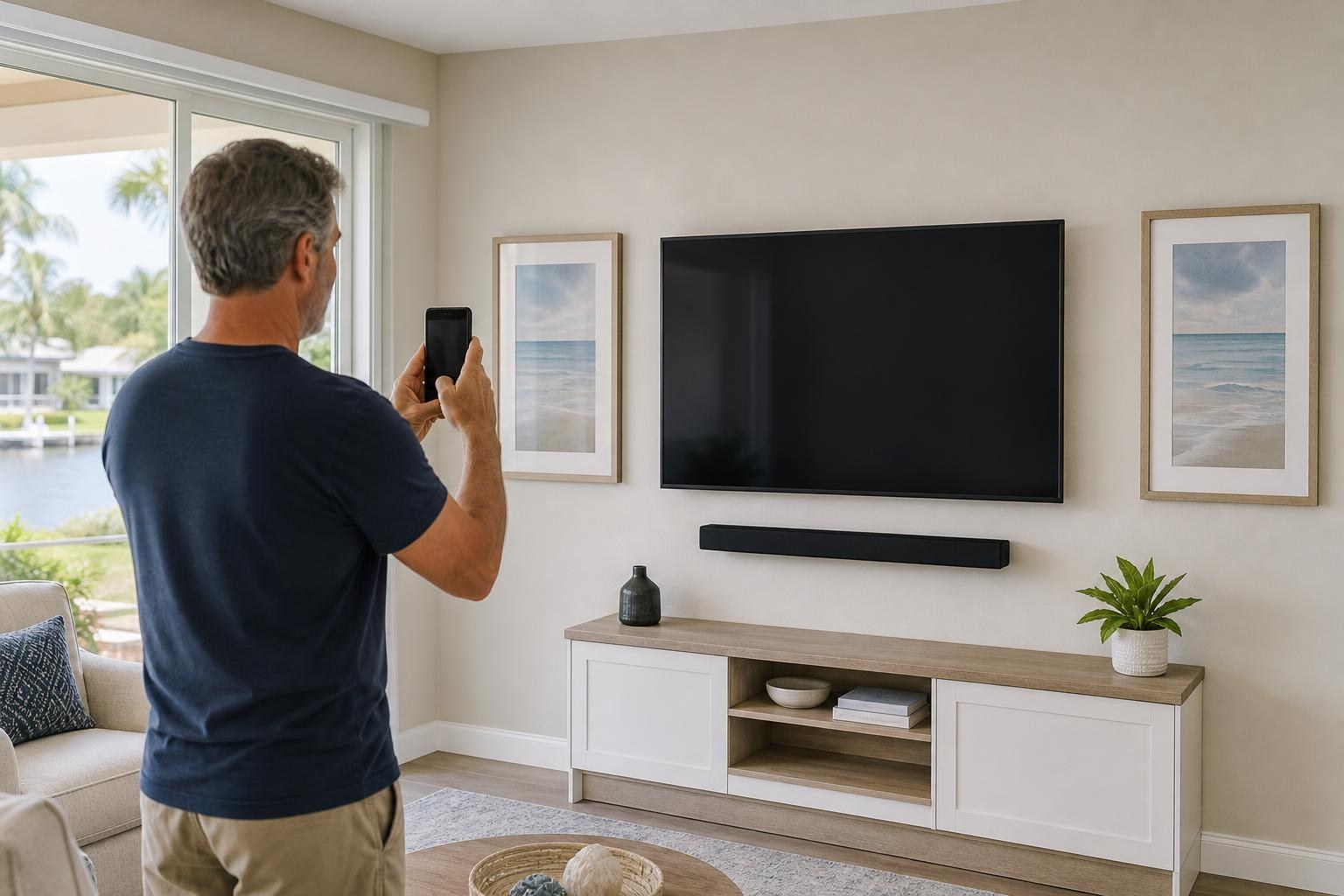
A wide photo establishes location, available floor space, nearby furniture, ceiling height, and potential access limitations. For TV mounting, it can show the proposed wall, viewing area, console, windows, and room layout. For furniture assembly, it shows whether there is enough open space to sort and assemble components.
Medium project view
This image should frame the wall, furniture carton, door, patio section, or other work area. It helps communicate overall size and how the project relates to nearby trim, outlets, doors, shelves, or fixtures.
Close-up detail
Use close-ups for drywall damage, existing mounting holes, chipped paint, lock hardware, model labels, furniture box labels, surface staining, or other details that may affect the scope. Keep a familiar object or tape measure in the frame when scale would otherwise be difficult to judge.
Photos should be current. Images from a listing or an earlier tenant may not show furniture placement, recent damage, or changes to the room.
Include Measurements That Affect Placement and Scope
Measurements do not replace an on-site assessment, but they can prevent major misunderstandings. Record the dimensions most closely related to the request rather than trying to measure every surface in the property.
For a mounted TV, provide the screen size, wall width, approximate preferred screen height, and console dimensions. Mention whether a soundbar will be mounted at the same time. If cable concealment is requested, explain which devices will connect to the television and where those devices will sit. Do not open walls or electrical components to investigate; a photo of the existing setup is more appropriate.
For wall repair, estimate the width and height of each damaged area and count how many separate areas need attention. For painting, provide room dimensions, ceiling height, current color, desired color, and whether the request covers full walls or localized touch-ups.
For furniture assembly, send the product name, model number, carton count, and assembled dimensions when available. A link to the manufacturer or retailer listing can be especially useful because it may show the product configuration and included components.
Describe the Surface, Product, and Existing Conditions
Two projects that look similar in a short message may require different planning. A floating shelf on drywall is not the same request as decor being placed on a masonry surface. An unopened dresser is different from a partially assembled dresser with mixed hardware. A clean nail hole is different from a soft or stained wall area.
Include relevant details such as:
- The wall or surface type, if known.
- Whether the product is new, used, unopened, or partially assembled.
- Whether mounting hardware, brackets, paint, or replacement parts are already available.
- Whether old hardware or an existing item must be removed first.
- Whether the area has previous patches, staining, peeling paint, or recurring damage.
- Whether the home is occupied, vacant, furnished, or being prepared for a tenant.
- Any stairs, gate instructions, parking constraints, elevator rules, or community access requirements.
Recurring stains, soft drywall, active moisture, or damage tied to a roof, plumbing, HVAC, electrical, structural, or other regulated system may need evaluation by an appropriately licensed professional before cosmetic wall repair proceeds. A handyman quote for patching or painting should not be treated as a diagnosis or repair of the underlying regulated-trade issue.
Separate Required Work From Optional Upgrades
When a quote request combines urgent repairs with design ideas, identify what must be completed and what you are still considering. This is particularly helpful for landlords, property managers, and homeowners working within a defined budget.
For example, your required scope may include assembling a bed, patching tenant wall holes, and installing a replacement lock. Optional items might include repainting the entire bedroom, adding floating shelves, or creating an accent wall.
This distinction helps keep the initial request focused without losing sight of improvements you may want priced or planned separately. It also makes it easier to compare a single-service appointment with a more coordinated room refresh.
Provide Finish Expectations, Not Just Task Names
“Wall repair” can mean patching damage, preparing the repaired area for paint, touching up with customer-supplied matching paint, or repainting a broader wall for a more consistent appearance. State the result you expect.
The same principle applies to media projects. Explain whether you need only the television mounted or also want a soundbar aligned beneath it and visible media cables addressed. USA Handyman Pros lists TV mounting from $129+, while final pricing varies according to the project details.
For other common projects, published starting prices include furniture assembly from $125+, drywall repair from $150+, full-room painting from $200+, and custom accent walls from $1,199+. These are starting prices rather than fixed prices for every property. Size, quantity, materials, surface conditions, access, preparation, removal needs, and desired finish can all change the final quote.
For Rental and Seasonal Properties, Clarify Who Is Coordinating
Crystal River has full-time residences as well as rentals and seasonally occupied properties. If you will not be present, identify the person authorized to provide access and answer placement questions.
A remote project brief should state whether the home is vacant, where customer-supplied products are located, and whether a tenant or local contact will be on-site. For visual projects such as picture hanging, TV placement, or floating shelves, confirm decisions before the appointment rather than leaving the installer to guess at height or spacing.
Property managers should also label photos by unit, room, and task. File names such as “Unit-2-living-room-TV-wall” are much easier to follow than a series of unlabeled images.
Review the Request Before Sending It
A strong quote request should answer five basic questions: What needs to be done? Where is it located? How many items or damaged areas are involved? What products or materials are available? What site conditions could affect the work?
You do not need to solve technical questions yourself. If you are uncertain about a wall material, hardware compatibility, or the best placement, say so and include clear photos. It is better to identify an unknown than to make an assumption that changes the scope later.
Request Your Crystal River Handyman Quote
When your project list, photos, measurements, product details, and access notes are ready, submit them together rather than across multiple conversations. A complete brief gives USA Handyman Pros a clearer starting point for reviewing approved non-regulated handyman work in Crystal River and nearby Citrus County communities.
You can request an instant quote or book online. You may also call (352) 462-0943 to discuss your project.
Ready to Get the Project Off Your To-Do List?
From furniture assembly and TV mounting to drywall repair, painting, pressure washing, accent walls, shelves, pictures, mirrors, and other approved handyman projects, USA Handyman Pros can help you turn the list into finished work.
USA Handyman Pros
(352) 462-0943
Project scope, materials, access, surface conditions, travel, availability, and final pricing can vary. Starting prices are not final quotes. Work requiring a licensed trade professional is outside the scope of this automated handyman content.