
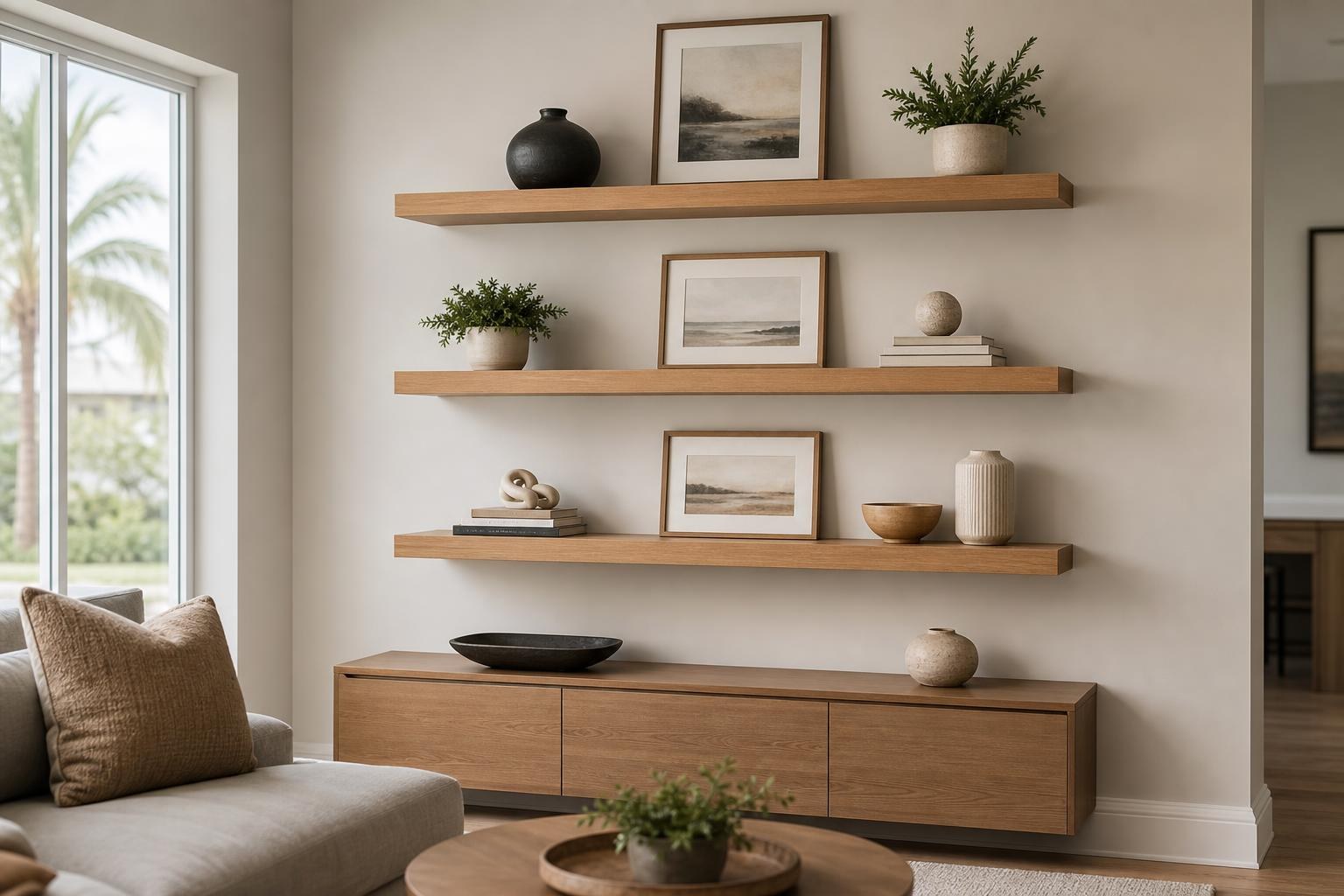
Floating Shelf Installation: What Determines Placement and a Polished Finish
September 16, 2026
Floating shelves can look effortless once they are installed, but the decisions behind that clean result are surprisingly specific. A shelf that is slightly too high, crowded against nearby furniture, or visually out of line with the room can make the entire wall feel unfinished.
For homeowners and property managers, the real question is not simply whether a shelf will fit. It is whether the placement will look intentional, support the shelf’s planned use, and work with the actual wall. Thinking through those details before installation helps prevent unnecessary holes, patching, and last-minute layout changes.
Start With What the Shelves Need to Accomplish
Placement should begin with function. Decorative shelves holding a few framed photos have different requirements from kitchen shelves carrying dishes or office shelves used for books and supplies. The intended contents affect shelf depth, spacing, hardware selection, and the importance of reaching suitable mounting points.
It helps to decide whether the shelves will serve as a focal point, fill an empty wall, create practical storage, or visually connect other features in the room. A shelf arrangement above a sofa may be designed around balance and artwork. Shelves beside a desk need to remain accessible without making the workspace feel cramped.
Before requesting service, identify what you expect to place on each shelf. Even a rough description helps a handyman evaluate whether your shelf system and preferred location are a sensible match.
Height Should Relate to the Room, Not Just Eye Level
“Eye level” is common design advice, but it is not a universal measurement. Shelf height should relate to nearby furniture, ceiling height, door and window trim, and how people move through the room.
A floating shelf above a console table needs enough separation for lamps, artwork, or everyday objects. Shelves above seating should not project into the space in a way that feels uncomfortable. In a hallway or narrow room, depth and head clearance may matter as much as height.
Existing architectural lines can provide useful reference points. Window tops, cabinet edges, wall paneling, and door trim can guide placement, but matching every line is not always the best visual choice. The goal is a composition that feels connected rather than accidentally misaligned.
Spacing Changes the Entire Finished Appearance
For a group of shelves, consistent spacing usually produces the cleanest result. However, equal spacing is not automatically ideal. The correct distance depends on shelf length, the objects being displayed, and whether the arrangement is stacked, staggered, or spread across a wide wall.
Before the mounting locations are finalized, consider:
- The height of books, plants, frames, baskets, or decor planned for each shelf
- Whether objects need to be removed frequently or are mostly decorative
- The amount of open wall space needed to keep the display from feeling crowded
- How shelf ends align with furniture, artwork, TVs, or other wall features
- Whether a symmetrical or intentionally offset arrangement suits the room
Temporary layout markers can make scale easier to judge before holes are made. This is especially valuable for long shelves or multi-shelf arrangements, where a small spacing change can noticeably affect the overall composition.
The Wall Condition Can Affect the Plan
A shelf’s preferred position and its practical mounting position are not always identical. Wall material, framing locations, previous repairs, texture, and surface condition can all influence the installation approach.
Drywall that is soft, cracked, bowed, or previously patched may need attention before a shelf is mounted. If an old shelf or wall accessory leaves damage behind, drywall patching and wall repair may be useful before the new layout is completed. A repaired area may also require paint touch-up so it does not remain visible around the finished shelf.
Mounting locations also need to account for the possibility of concealed utilities. Shelves should not simply be placed wherever they look best without considering what may be behind the wall. Any concern involving regulated electrical, plumbing, or other trade work should be handled by an appropriately licensed professional.
Bracket Design and Shelf Quality Matter
“Floating” describes the finished appearance, not one universal mounting system. Some shelves use separate concealed rods, while others include a full mounting bar or manufacturer-specific bracket. Hardware quality, bracket geometry, shelf construction, and installation tolerances all influence how level and stable the result feels.
Inexpensive or damaged components can make a shelf appear tilted even when the wall markings are accurate. Warped shelf material, loose internal channels, missing hardware, or brackets that do not sit flush may also affect the final appearance.
Keep the manufacturer’s hardware, packaging, instructions, and stated load information together before the appointment. If any components are missing, identifying that early can prevent an incomplete installation.
Load Expectations Affect Placement and Hardware
A floating shelf should be planned around its expected contents, not styled first and evaluated later. A few lightweight decorative pieces impose different demands than books, dinnerware, or a collection of heavy objects.
Load capacity is not determined by the shelf board alone. It depends on the complete system, including the bracket, fasteners, wall material, mounting locations, shelf depth, and how weight is distributed. Manufacturer ratings may also assume specific installation conditions.
A handyman should know what the shelf will hold before installation. Avoid relying on appearance as evidence that a shelf can support substantial weight. When the planned load exceeds the shelf system’s rating or is unsuitable for the wall, changing the shelf, location, or storage plan is better than forcing the original design.
Small Finish Details Create a Built-In Look
A professional-looking installation is about more than getting the shelf onto the wall. Level lines, consistent gaps, clean contact with the wall, and thoughtful alignment with nearby features all contribute to the finished effect.
Wall texture and straightness can be especially noticeable behind a long shelf. A shelf may be level while an uneven ceiling or bowed wall creates the illusion that it is not. Evaluating the whole room helps determine which reference line should guide the composition.
Paint condition matters as well. Moving an existing shelf can reveal fading, old anchor holes, or a different paint sheen. A small touch-up may work when matching paint is available, while a broader color or sheen mismatch may call for wall or full-room painting. Making that decision before installation is usually easier than painting closely around newly mounted shelves.
What Affects a Floating Shelf Installation Quote?
Floating shelf pricing varies because the number of shelves alone does not describe the project. Two shelves on an open, ready-to-mount wall are different from a multi-shelf display that requires detailed spacing, removal of old hardware, wall repair, or coordination with existing decor.
Useful quote details include:
- The number, dimensions, depth, and approximate weight of the shelves
- Photos of the shelf, included bracket, hardware, and manufacturer label
- A wide photo showing the entire destination wall and nearby furniture
- The wall material, if known, and any visible damage or previous mounting holes
- The approximate contents and weight you expect each shelf to hold
- Whether old shelves or wall decor need to be removed first
- Whether patching or paint touch-ups are part of the requested scope
Clear photos also help identify access issues, high placement, crowded work areas, and complicated layouts. USA Handyman Pros handles floating shelves and related non-regulated wall-mounting projects as part of its broader handyman services.
Planning Multiple Units or Rental Properties
Property managers and landlords may want a repeatable layout that works across several rooms or units. In that situation, shelf model, mounting height, paint color, and intended use should be documented before work begins. Standardization can help create a consistent appearance, but each wall still needs to be evaluated individually.
For occupied rentals, confirm which belongings need to be moved and who will approve the final placement. For vacant properties, decide whether shelves are a permanent amenity or staging feature and choose neutral locations that will work with different furniture arrangements.
Prepare for a Cleaner, More Efficient Appointment
Have all shelves and hardware on-site, clear furniture and fragile objects away from the wall, and decide who can approve placement. If the layout is not final, gather inspiration photos and measure the main furniture pieces that will remain below or beside the shelves.
Homeowners and property managers in Marion, Levy, Citrus, Alachua, and Orange counties can send project details through the instant quote form. When you are ready to move forward, you can also book USA Handyman Pros online or call (352) 462-0943. A few clear photos and an honest description of the planned shelf contents provide a strong starting point for discussing placement, scope, and finished appearance.
Ready to Get the Project Off Your To-Do List?
From furniture assembly and TV mounting to drywall repair, painting, pressure washing, accent walls, shelves, pictures, mirrors, and other approved handyman projects, USA Handyman Pros can help you turn the list into finished work.
USA Handyman Pros
(352) 462-0943
Project scope, materials, access, surface conditions, travel, availability, and final pricing can vary. Starting prices are not final quotes. Work requiring a licensed trade professional is outside the scope of this automated handyman content.