Screened Lanai Pressure Washing in Florida: How to Define the Right Cleaning Scope
November 2, 2026
Your Florida lanai may look like one cleaning project, but a quote can mean very different things depending on whether it covers only the floor, the screened enclosure, the ceiling, exterior doors, or the area around a pool. That distinction matters when you are comparing estimates or preparing a rental for new occupants.
Before booking screened lanai pressure washing, define what needs attention and what result you expect. A clear scope helps the service provider choose an appropriate cleaning approach, identify delicate surfaces, and explain which discoloration may require more than routine washing.
Why “wash the lanai” is not a complete project description
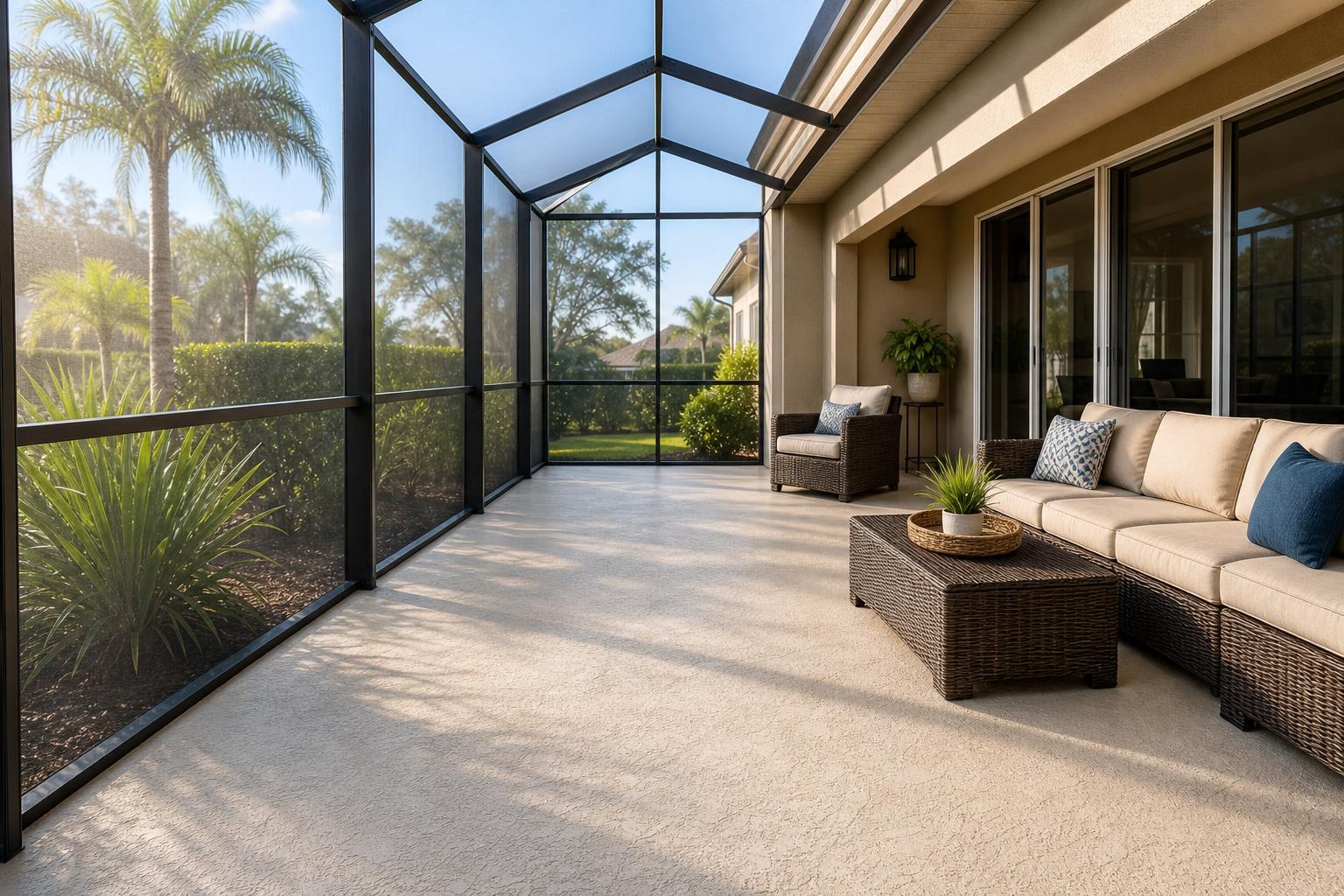
Lanais collect outdoor debris while remaining partly enclosed. Florida humidity, frequent rain, pollen, insects, windblown soil, and limited sunlight can create several types of buildup in the same space. The concrete floor may have dark organic film, while the aluminum enclosure has dust, cobwebs, and oxidation. Painted walls and screen mesh introduce different cleaning considerations.
Square footage is useful, but it does not describe the entire job. A 200-square-foot open patio is not necessarily comparable to a 200-square-foot screened lanai with furniture, multiple doors, a pool edge, and buildup on enclosure frames.
When reviewing professional pressure-washing services, confirm exactly which surfaces are included rather than assuming the entire enclosure will be cleaned automatically.
Common Florida lanai buildup—and realistic expectations
Pressure washing can remove a substantial amount of ordinary outdoor grime, but not every mark is surface dirt. Identifying the likely source of discoloration makes it easier to set realistic expectations before the appointment.
- Organic surface buildup: Green, brown, or dark film frequently develops in damp, shaded areas. Routine exterior cleaning may improve this considerably, although deeply discolored or deteriorated material can remain visible.
- Pollen and windblown soil: Fine debris settles along floor edges, door tracks, enclosure frames, and furniture footprints. Heavy accumulations may require more detailed attention than an open-surface rinse.
- Cobwebs and insect debris: Screen corners, frame intersections, light fixtures, and ceiling edges tend to collect webs. Tell the provider if overhead detailing is part of the requested scope.
- Grill and food residue: Greasy spots near cooking or dining areas may not respond like ordinary dirt. Include close photos of these areas when requesting a quote.
- Rust, mineral deposits, and fertilizer marks: Orange, white, or chalky discoloration may be a stain or material reaction rather than loose buildup. Washing alone may not produce a uniform finish.
A useful estimate should separate routine washing from stain-specific treatment when that distinction applies. It should also avoid promising that an older, weathered surface will look newly installed.
The surface matters as much as the buildup
Concrete and textured pool decks
Uncoated concrete often shows traffic patterns, furniture outlines, algae-like film, and darker areas where water collects. Textured pool decks can hold debris in low points and may require more attention than a flat slab of the same size.
Existing cracks, worn coatings, drainage issues, or loose surface material should be photographed before service. Washing can clean a surface, but it does not repair deterioration or correct areas that hold water.
Pavers and joint sand
Paver patios have joints, edges, and sometimes an existing sealer. Aggressive cleaning can disturb loose joint material, so the provider needs to know that the floor is paved rather than poured concrete. Ask whether the quote covers cleaning only; resetting pavers, replenishing joint material, and applying sealer are separate project considerations and should not be assumed.
Painted or coated floors
A painted lanai floor may have peeling, bubbling, fading, or previous touch-ups. These conditions affect how the surface should be approached and what improvement is reasonable. Pressure washing will not restore failed paint, and loose coating may become more apparent after dirt is removed.
If repainting is planned, mention that when requesting the cleaning quote. It helps clarify whether this is general maintenance or preparation for a separate cosmetic project.
Screens and aluminum enclosure frames
Screen mesh and enclosure components should not be treated like a concrete slab. Age, loose spline, torn mesh, bent framing, and brittle areas can limit the appropriate cleaning method. Aluminum frames may also develop chalking or oxidation that resembles dirt but does not simply wash away.
Send photos of damaged screens or loose enclosure components in advance. Cleaning should not be expected to repair those conditions, and vulnerable areas may need to be excluded from the scope.
What to include in a screened lanai cleaning quote
To compare estimates fairly, ask each provider to price the same defined area. Your project description should clarify whether you want:
- The lanai or patio floor only
- Screen mesh and enclosure frames
- Accessible ceiling surfaces and upper corners
- Exterior-facing walls, trim, and doors within the enclosure
- Steps, thresholds, walkways, or a connected pool deck
- Movement of lightweight furniture or cleaning around items in place
- Attention to specific grease, rust-colored, mineral, or organic stains
- Cleanup of loosened debris from corners, tracks, and adjacent areas
If the lanai borders a swimming pool, note that clearly. Ask how the work area will be managed near the pool and whether the estimate covers the entire deck or only the enclosed seating area. Likewise, identify nearby landscaping, fragile decor, outdoor electronics, pet items, and stored belongings.
How to prepare the space without creating extra work
A mostly clear lanai gives the provider better access and reduces furniture-shaped outlines. Remove cushions, rugs, small planters, toys, pet bowls, table decorations, and lightweight personal items when practical. Store anything that should not get wet.
Do not assume large grills, cabinets, refrigerators, or heavy tables are included in routine item movement. Instead, list bulky objects in the quote request and explain whether they can remain in place. For appliances, note whether only the accessible floor around them should be cleaned; disconnecting utilities or performing regulated trade work is outside an ordinary pressure-washing scope.
Keep doors and windows closed, point out areas with worn seals, and arrange access if the property is vacant. Renters and property managers should also confirm which belongings belong to the occupant and which remain with the property before anything is moved.
What the lanai may look like after washing
A successful cleaning should remove loose debris and improve the appearance of washable surface buildup within the agreed scope. However, the cleaned area may reveal conditions that dirt previously concealed, including faded paint, mismatched repairs, paver color variation, cracks, worn coatings, oxidation, or permanent staining.
Some shaded sections can also look different while drying. Evaluate the overall appearance after the surfaces have had time to dry rather than judging only from wet concrete or pavers.
If appearance is important for listing photos, a tenant turnover, or an upcoming gathering, schedule enough time to assess the cleaned surface and decide whether separate touch-up painting or minor wall repair is warranted. Avoid treating washing as a substitute for those cosmetic services.
A better approach for rental and property-management projects
For a rental turnover, document the lanai before furniture or discarded items are removed. Then create a second set of photos after the space is cleared. This separates hauling or tenant-property questions from the actual cleaning scope.
Property managers should identify the unit address, access instructions, water-access considerations, surface type, approximate dimensions, and deadline. If multiple patios or common areas are involved, label the photos by unit or location. That small amount of organization can prevent a quote for one floor from being mistaken for an entire screened enclosure.
Photos that help produce a clearer quote
Start with one wide photo from each entrance, followed by closer images of the heaviest buildup and any delicate or damaged areas. Include the full floor, enclosure height, doors, steps, pool edge, and large items that will remain. If you know the approximate length and width, provide those measurements as well.
For properties in Ocala, Gainesville, Orlando, and surrounding Central Florida communities, seasonal humidity and shaded outdoor spaces make lanai maintenance a recurring concern. The most useful quote request is still property-specific: surface type, condition, access, contents, and desired cleaning boundaries matter more than the city name alone.
Request a quote for your patio or lanai
USA Handyman Pros serves homeowners, rentals, property managers, and businesses across Marion, Levy, Citrus, Alachua, and Orange counties and nearby communities. To discuss patio or screened lanai pressure washing, submit photos and project details through the instant quote form. When you are ready to schedule, you can also book online or call (352) 462-0943.
Ready to Get the Project Off Your To-Do List?
From furniture assembly and TV mounting to drywall repair, painting, pressure washing, accent walls, shelves, pictures, mirrors, and other approved handyman projects, USA Handyman Pros can help you turn the list into finished work.
USA Handyman Pros
(352) 462-0943
Project scope, materials, access, surface conditions, travel, availability, and final pricing can vary. Starting prices are not final quotes. Work requiring a licensed trade professional is outside the scope of this automated handyman content.