
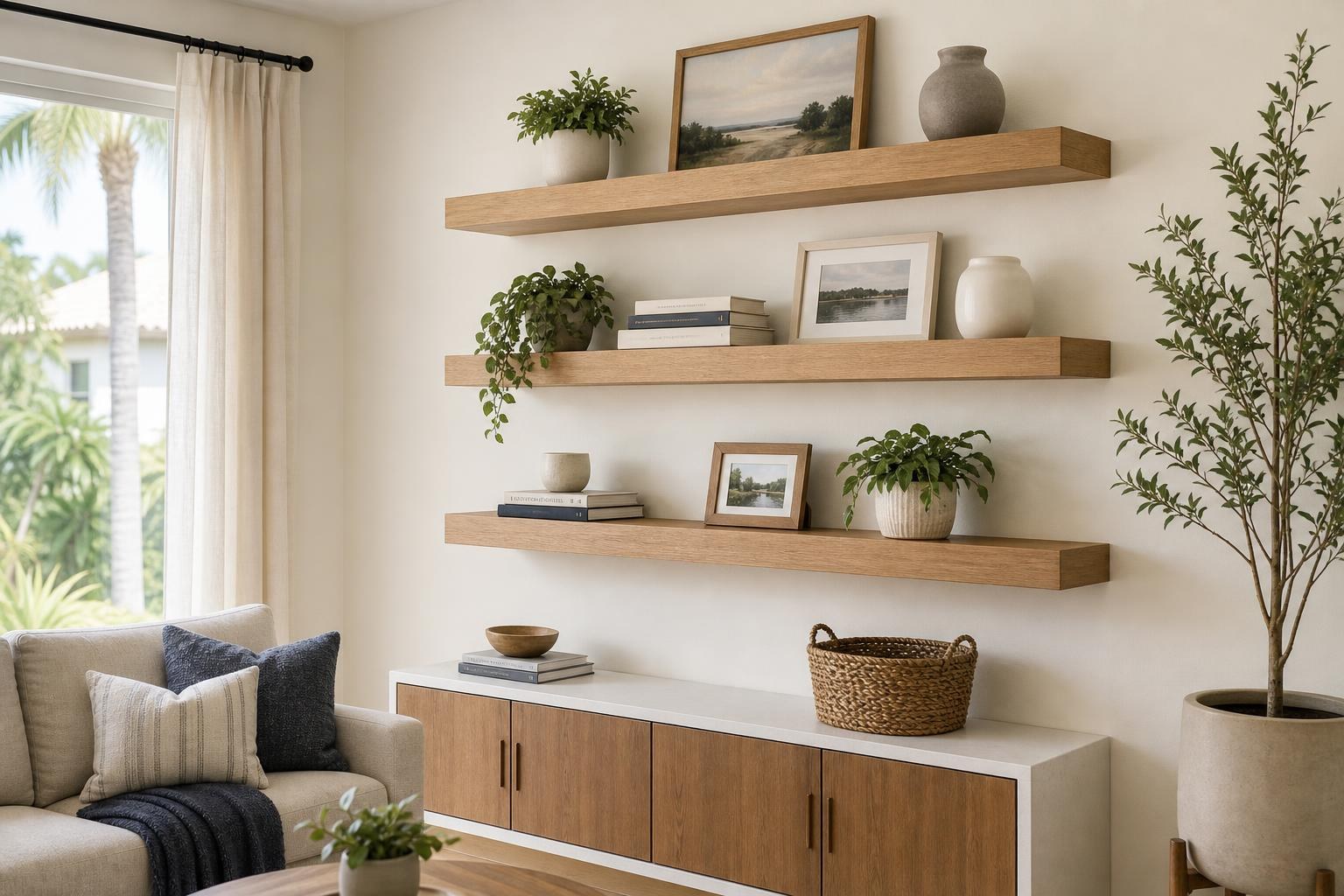
Will Those Floating Shelves Work on Your Wall? What to Check Before Installation
October 23, 2026
A floating shelf can look simple in an online product photo, yet the finished result depends on much more than choosing a color and width. Homeowners often discover too late that the included mounting bracket does not suit the wall, the shelf cannot support the intended items, or the planned location conflicts with furniture, artwork, switches, or other room features.
If you are preparing for floating shelf installation in an Ocala home, Gainesville apartment, Crystal River rental, or another Central Florida property, a few checks before purchasing can make the project easier to quote and more likely to produce a clean, intentional finish.
Start With What the Shelves Need to Hold
The first planning question is not where the shelves should go. It is what you expect them to hold.
Lightweight decor, framed photos, and small artificial plants create a different mounting requirement than books, dinnerware, countertop appliances, or a collection of heavy objects. Shelf width also matters because weight distributed across a long shelf affects the bracket differently than one small item placed near the wall.
Review the manufacturer’s stated load guidance before ordering. That rating may depend on the mounting surface, hardware, bracket engagement, and correct installation. It should not be treated as a universal promise for every wall.
For homes with children or pets, placement deserves additional consideration. A low shelf should not become a climbing point, and fragile or heavy decor should not be positioned where it can be easily pulled down.
The Shelf Kit and the Wall Must Be Compatible
Many floating shelves arrive as a package containing the shelf, a hidden bracket, and basic fasteners. The presence of mounting hardware does not automatically mean that every included component is appropriate for every property.
The installer may need to evaluate several conditions:
- The wall surface and its current condition
- The available mounting points behind the surface
- The design and spacing of the shelf’s hidden bracket
- The shelf manufacturer’s installation requirements
- The intended load after installation
- Whether previous holes or repairs are present
- Whether the shelf sits flat against the wall
Some inexpensive shelves use short or flexible brackets that make it difficult to achieve the crisp, level appearance shown in marketing photos. Others have limited adjustment once mounted. Looking at the bracket—not just the decorative shelf—is one of the best ways to compare products before buying.
Wall Condition Affects the Finished Appearance
A floating shelf places its back edge directly against the wall, so surface imperfections can become easy to see. A bowed wall, heavy texture, damaged drywall, or an old patch can create a visible gap even when the shelf itself is level.
Previous mounting attempts can also complicate the location. Multiple holes may need cosmetic attention, especially if the new shelf is shorter or positioned differently. USA Handyman Pros offers drywall patching and wall repair for situations where unwanted holes or damaged areas should be addressed before the final installation.
Paint condition matters as well. Moving or replacing an existing shelf may reveal a different paint color, an unpainted outline, or compressed wall texture. A small touch-up may be enough in some rooms, while a more visible wall could benefit from broader painting or a coordinated design update.
Plan the Entire Wall, Not One Shelf at a Time
A shelf can be securely installed and still look misplaced. The strongest layouts account for the wall as a complete composition.
Use nearby furniture as a visual anchor
Shelves installed above a sofa, desk, console, dresser, or toilet should relate visually to the object below them. If the shelves are much wider than the furniture, noticeably off-center, or too close to the ceiling, the wall may feel unbalanced.
Furniture placement should be settled before installation whenever possible. This is especially important in move-ins and rental turnovers, where an empty room can make shelf placement difficult to judge.
Consider what will be displayed
The empty space between shelves may appear generous until books, plants, baskets, or framed pieces are added. Planning around the approximate height of the displayed objects reduces the chance that the arrangement will feel crowded.
If decor will change seasonally, allow enough flexibility for different object heights rather than designing the spacing around one exact display.
Account for other wall features
Door trim, windows, wall controls, televisions, artwork, vents, and existing furniture can influence the visual center of the arrangement. The best location may not be the mathematical center of the wall if the room’s usable space is asymmetrical.
For a more architectural treatment, floating shelves can also be coordinated with custom accent walls or wall panels. Planning both features together helps avoid spacing conflicts and creates a more unified result.
Kitchen, Bathroom, and Rental Installations Need Extra Planning
In kitchens, intended contents can become heavier than expected. Plates, glassware, cookbooks, and pantry containers add weight quickly. Shelf depth should also make sense for the work area so the shelf does not project awkwardly over a counter or interfere with everyday use.
Bathrooms introduce moisture and cleaning concerns. The shelf material and finish should be appropriate for the room, and placement should avoid creating an inconvenient obstruction around mirrors, doors, or fixtures. Work involving plumbing or electrical systems should be directed to an appropriately licensed trade professional; a handyman shelf project should remain focused on suitable surface mounting and cosmetic coordination.
Renters should obtain property approval before authorizing wall mounting. Property managers may also want a repeatable layout and shelf model across multiple units. Standardizing the product can simplify replacement decisions, but each wall should still be evaluated rather than assuming all units have identical conditions.
What Changes the Installation Quote?
There is no single price that fits every floating shelf project. The quote can change based on the number and size of shelves, mounting system, wall condition, layout complexity, intended use, access to the work area, and whether related wall repairs are requested.
A single shelf on a clear wall is a different scope from six shelves requiring precise alignment around a television or home-office desk. Product quality can affect labor as well. Brackets with inconsistent dimensions, missing components, or limited adjustment may require additional evaluation and may not deliver the desired result.
When requesting a quote, provide:
- Photos of the full wall and surrounding furniture
- A close photo of any cracks, patches, texture, or previous holes
- The number, width, depth, and brand of the shelves
- Photos of the bracket and included hardware
- Links to the product listing or installation documentation
- A description of what the shelves will hold
- Whether the property is owner-occupied, rented, or professionally managed
If the shelves have already been delivered, confirm that all pieces are present and free from visible damage. Keep the packaging and manufacturer instructions available until the project is complete.
When to Combine Floating Shelves With Other Handyman Work
Shelf installation is often part of a larger room setup. It may make sense to coordinate shelves with picture or mirror hanging, furniture assembly, wall touch-ups, a television layout, or decor placement. Bundling related tasks gives the installer a clearer view of the finished room and can reduce conflicts between individually planned items.
Property managers can take a similar approach during turnovers by grouping shelf removal, minor wall repairs, decor mounting, and other approved handyman services into one documented scope. Photos and a room-by-room list help distinguish must-complete repairs from optional upgrades.
Get the Product and Project Details Reviewed Before Installation
A polished floating shelf installation begins with a compatible shelf, a suitable wall, realistic load expectations, and a layout that works with the entire room. Taking time to document those details can help avoid poor proportions, visible gaps, unnecessary holes, and last-minute product surprises.
USA Handyman Pros serves homeowners, rentals, property managers, and businesses across Marion, Levy, Citrus, Alachua, and Orange counties, along with nearby Central Florida communities. To discuss your shelves and related wall projects, request an instant quote or book online. You can also call (352) 462-0943.
Ready to Get the Project Off Your To-Do List?
From furniture assembly and TV mounting to drywall repair, painting, pressure washing, accent walls, shelves, pictures, mirrors, and other approved handyman projects, USA Handyman Pros can help you turn the list into finished work.
USA Handyman Pros
(352) 462-0943
Project scope, materials, access, surface conditions, travel, availability, and final pricing can vary. Starting prices are not final quotes. Work requiring a licensed trade professional is outside the scope of this automated handyman content.