
Before You Book Large Furniture Assembly: Measure Access, Placement, and Project Scope
September 14, 2026
A large wardrobe, entertainment center, sectional desk, bunk bed, or storage system can transform a room—but only if it fits the space and is assembled where you actually want it. Before booking a handyman, the most important decisions are often less about nuts and bolts and more about access, placement, product condition, and the final layout.
This matters because some large furniture cannot be moved easily once assembled. A completed piece may be too tall to stand upright, too wide to pass through a doorway, or too heavy to reposition without risking damage to the furniture, walls, or flooring.
If you are planning furniture assembly in Ocala, Gainesville, Orlando, Citrus Springs, or another Central Florida community, a few practical checks can help you request a more accurate quote and avoid paying for preventable rework.
Start With the Furniture’s Final Location
Choose the final room and approximate placement before the appointment. Avoid treating this as a decision you can make after assembly, especially with oversized or multi-section pieces.
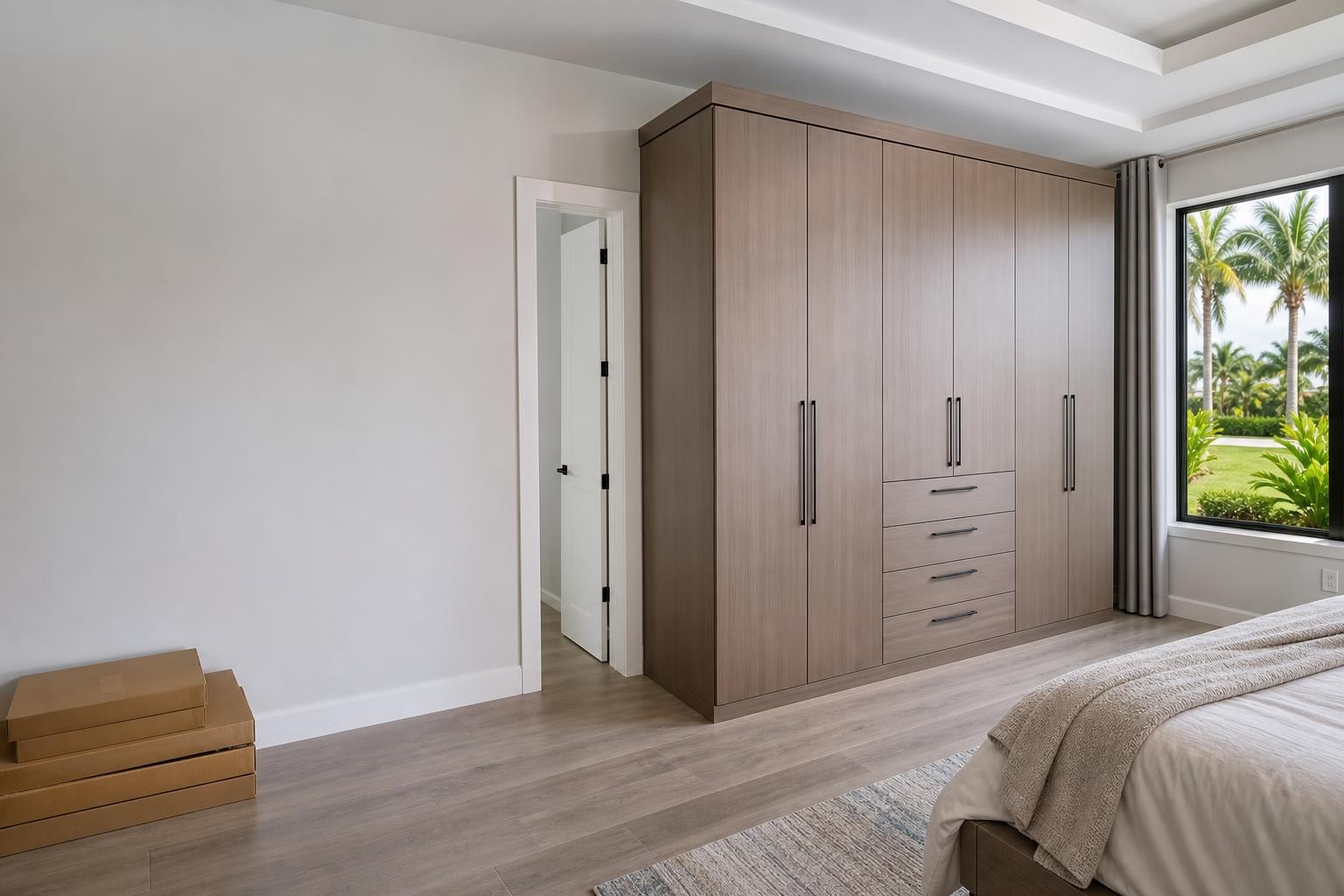
Consider how the furniture will affect doors, windows, walkways, vents, outlets, baseboards, and nearby furnishings. A tall wardrobe may fit the wall but prevent a bedroom door from opening completely. A large desk may look right on a floor plan yet leave too little room for the chair. An entertainment center could interfere with the preferred TV position or media-cable path.
Property managers should also consider how the layout will affect cleaning, inspections, and future tenant turnover. Furniture that is tightly wedged between walls can be difficult to maintain or remove.
Marking the approximate footprint with painter’s tape can help you visualize the occupied floor area without assembling anything. You do not need to map every component; the goal is simply to confirm that the finished dimensions make sense in the room.
Finished Dimensions Are Only Part of the Fit Question
Product listings typically provide assembled width, depth, and height. Those numbers are essential, but they do not tell the whole story.
Assembly may require temporary working space around the furniture. Some pieces are built flat and then raised upright, which can require more ceiling clearance than the final standing height suggests. Others must be assembled in sections and connected from the sides or back.
Review the manufacturer’s stated dimensions and assembly notes before booking. If you are unsure whether a piece can be built in a tight room, include the product link or instruction manual with your quote request. A handyman can then better understand the product design and expected scope.
Measure the route into the room
If boxes or partially assembled sections must travel through the home, check the full route—not just the final doorway. Important pinch points may include stair landings, hallway turns, low ceilings, narrow entryways, and door hardware.
For apartment and condominium projects, account for elevators, loading areas, building entry rules, and permitted service hours. If elevator reservations or access instructions apply, confirm them before choosing an appointment date.
Decide Whether the Furniture Should Be Assembled in Place
Large furniture is often best assembled in its final room. This reduces the chance that a completed unit will not fit through a doorway or around a hallway corner.
That does not necessarily mean it should sit in its precise final position throughout the entire appointment. The assembler may need room to access fasteners, align panels, attach backing, or connect separate sections. Once the piece is complete, it can be moved into its intended position when doing so is practical and safe.
If a room is small, remove lightweight clutter and movable decor in advance. You generally do not need to empty an entire room, but there should be a clear working area and an unobstructed route from the packaged components to the assembly location.
Confirm What Arrived Before the Appointment
Large flat-pack products may arrive in several cartons, sometimes through separate deliveries. Check the carton count against the retailer’s shipping information before scheduling assembly around a deadline.
You do not need to unpack every panel. In fact, keeping small hardware organized in its original packaging can be helpful. However, inspect the boxes for obvious crushing, punctures, water exposure, or opened ends. If a major panel is visibly damaged, contacting the retailer before assembly may save time.
Keep the instruction manual, hardware packs, and product identification labels with the furniture. If the instructions are digital, save the link or PDF where it can be accessed easily during the appointment.
Anchoring and Wall Contact Need Advance Attention
Some tall or top-heavy furniture includes manufacturer-provided anti-tip hardware. Whether anchoring is appropriate depends on the product instructions, wall surface, intended location, and property rules.
Tell the handyman if the furniture is expected to be secured to a wall. Include a clear photo of the wall and mention whether it is standard drywall, masonry, decorative paneling, or another surface. If you rent, obtain any required landlord or property-management approval before holes are made.
Also identify baseboards or trim that may prevent the furniture from sitting flush. Do not assume that trim should be removed or altered. That would change the project scope and should be discussed before work begins.
What Affects a Large Furniture Assembly Quote?
Furniture assembly starts from $125+, with final pricing varying by project details. Large projects are not priced by size alone. A tall but simple shelving unit may be less involved than a smaller cabinet containing drawers, doors, hinges, lighting-ready features, or multiple connected sections.
Useful details to provide with your quote request include:
- The retailer, product name, model number, or direct product link
- The number of furniture pieces and shipping cartons
- Photos of the boxes, product labels, final room, and access route
- The floor level and whether stairs or elevator access are involved
- Whether the item is new, partially assembled, or previously disassembled
- Any visible shipping damage or missing packaging
- Whether manufacturer-specified wall anchoring is expected
- Whether old furniture must be moved before the new piece can be assembled
These details help distinguish a straightforward flat-pack project from a complex installation involving tight access, numerous components, or corrective work on an item someone has already started.
Partially Assembled Furniture May Require Extra Evaluation
It can be tempting to begin the project and call for help only when something no longer lines up. However, partially assembled furniture may need to be evaluated before work can continue.
Panels installed backward, overtightened connectors, mixed hardware, or damaged particleboard can change the scope. In some cases, sections must be carefully taken apart before correct assembly can resume. Original instructions and all remaining hardware become especially important in this situation.
Be candid about the furniture’s condition when requesting a quote. A clear photo of the current stage is more useful than simply describing the item as “almost finished.”
Coordinate Related Room Projects in the Right Order
If the room also needs painting, wall repair, TV mounting, shelves, or artwork, decide on the order before the furniture occupies the space. Completing wall-focused work first may provide better access and reduce the need to move a newly assembled piece.
For example, visible holes or surface damage can be addressed through professional drywall repair before a wardrobe or media console blocks the wall. A TV layout should also be planned in relation to the entertainment furniture rather than treated as a separate decision afterward.
When requesting multiple non-regulated handyman services, describe the whole room goal. This makes it easier to identify dependencies and determine what should happen first.
A Better Booking Starts With a Clear Project Picture
Large furniture assembly goes more smoothly when the handyman knows what is being assembled, where it will go, how it will reach the room, and whether anchoring or related wall work is part of the request. The best preparation is not opening every box or sorting every fastener. It is making the key layout and access decisions before the appointment.
USA Handyman Pros serves homeowners, renters, property managers, and businesses across Central Florida, including Marion, Levy, Citrus, Alachua, and Orange counties. To discuss your project, request an instant quote with product and room details, or book online. You can also call (352) 462-0943.
Ready to Get the Project Off Your To-Do List?
From furniture assembly and TV mounting to drywall repair, painting, pressure washing, accent walls, shelves, pictures, mirrors, and other approved handyman projects, USA Handyman Pros can help you turn the list into finished work.
USA Handyman Pros
(352) 462-0943
Project scope, materials, access, surface conditions, travel, availability, and final pricing can vary. Starting prices are not final quotes. Work requiring a licensed trade professional is outside the scope of this automated handyman content.