
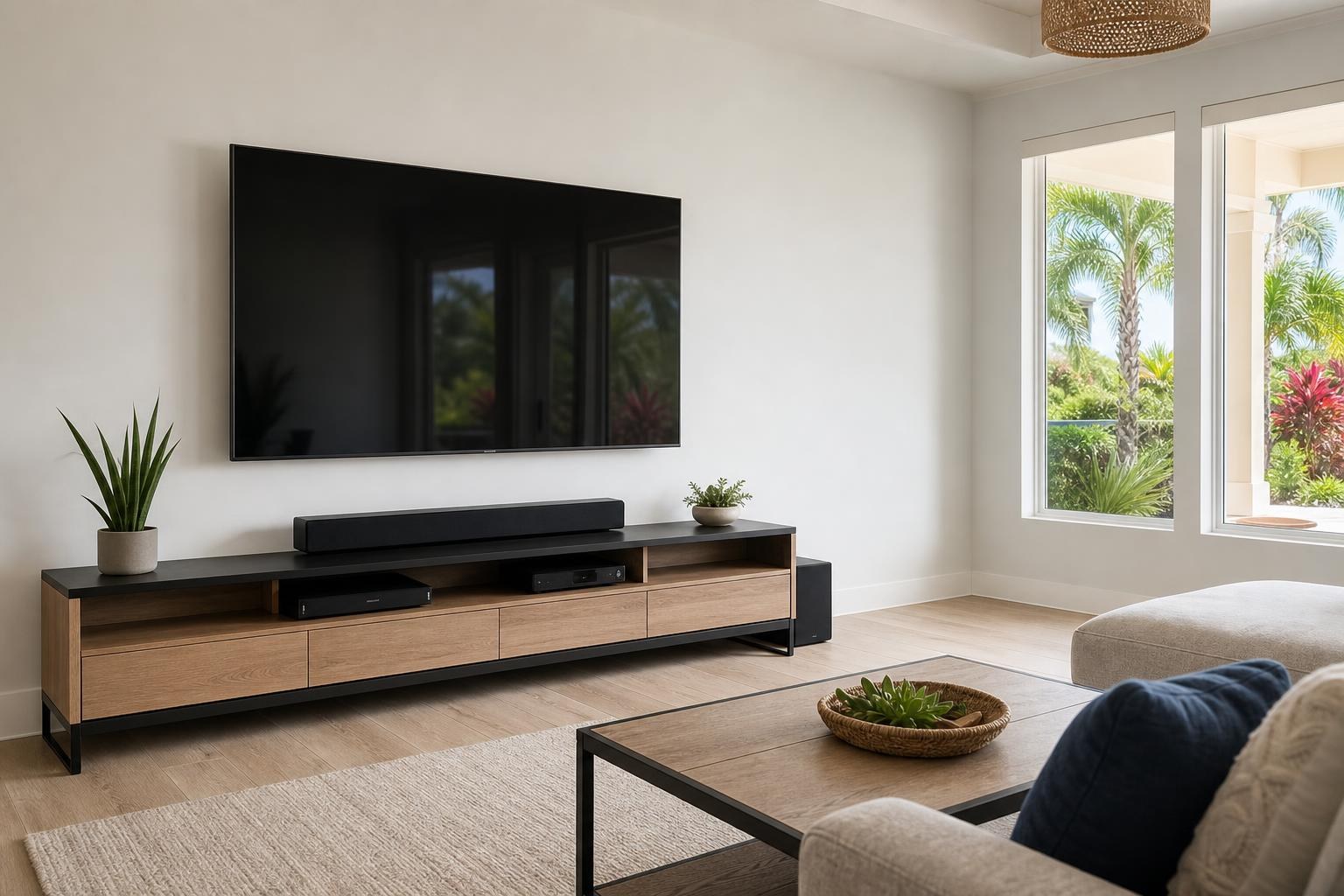
TV Mounting and Furniture Assembly in One Appointment: A Smarter Room Setup Plan
September 5, 2026
You have a boxed media console on the floor, a new television waiting to be mounted, and a living room that still does not feel finished. The practical question is whether both projects can be handled during one appointment—and how to plan the room so the TV does not end up too high, off-center, or awkwardly positioned above the furniture.
In many homes, rentals, offices, and furnished properties, combining TV mounting with furniture assembly is a sensible way to complete the space. The key is providing the right project details before the visit and making layout decisions in the right order.
Why These Two Projects Should Be Planned Together
A television is rarely the only object determining the layout of a media wall. The height of the console, the depth of the furniture, the location of the seating, and the size of the screen all influence where the TV should go.
If the television is mounted first and the media console is assembled later, homeowners sometimes discover that the spacing feels wrong. The screen may sit too close to the furniture, the console may cover a wall plate, or the TV may look noticeably off-center once the finished piece is in place.
Assembling the relevant furniture first creates a reliable reference point. Once the console, cabinet, desk, dresser, or shelving unit is in its intended position, TV placement can be evaluated against the actual dimensions instead of estimates from a product listing.
This approach is especially useful for property managers furnishing rentals, homeowners setting up a recently purchased home, and businesses preparing a conference room, waiting area, or office.
A Practical Order for the Appointment
The most efficient sequence depends on the room and the furniture being assembled, but a coordinated appointment will generally begin with confirming the intended layout. The furniture can then be assembled and positioned before the final TV location is approved.
1. Confirm the room arrangement
Before work begins, decide which wall will hold the TV and where the primary seating will sit. Consider glare from nearby windows, walking paths, door swings, and whether the screen will be comfortable to view from the main seats.
2. Assemble the furniture that affects TV placement
A media console or entertainment cabinet should normally be assembled before the screen location is finalized. If the appointment includes unrelated furniture, such as a dining table or bookcase in another room, those items may be completed in whichever order makes the workspace more efficient.
3. Approve the TV position using the finished furniture
With the console in place, the screen can be visually centered and its height considered in relation to both the furniture and seating. This is the point to confirm whether a soundbar, floating shelf, artwork, or other wall-mounted item also needs space.
4. Address the visible media cables
If a cleaner finish is part of the goal, discuss approved TV wire and media-cable concealment when requesting the quote. Cable concealment is a separate planning detail and should not be assumed to be included with basic mounting. It also does not mean relocating electrical service or performing regulated electrical work.
What to Decide Before Requesting a Quote
A clear scope helps determine whether both services can reasonably be scheduled together and what the project may involve. Gather the following information before submitting your request:
- TV brand, screen size, and model number
- Whether you already have a compatible fixed, tilting, or articulating mount
- Photos of the entire TV wall, not just a close-up of one spot
- Furniture brand, model, product link, or assembly instructions
- Number of furniture pieces and whether they are still boxed
- Finished dimensions of the media console or cabinet
- Known wall material and any unusual wall conditions
- Whether a soundbar, shelf, wireless camera, mirror, or artwork is also being mounted
- Whether visible media cables need to be organized or concealed
- Any access requirements for a rental, gated community, office, or occupied unit
For wall-mounted projects, wide room photos are particularly valuable. They show nearby doors, windows, furniture, corners, and wall plates that could affect placement. For furniture assembly, a photo of the box label can help identify the exact model and expected scope.
What Affects the Price of a Combined Project?
USA Handyman Pros lists furniture assembly starting at $125+ and TV mounting starting at $129+. These are starting prices, not a universal combined rate. Final pricing varies according to the specific project details.
For furniture, cost considerations can include the number of pieces, their size and complexity, the condition of the parts, and whether the work area is ready. A simple side table is a different project from a multi-section entertainment center with numerous panels, doors, and shelves.
For TV mounting, relevant details include screen size, mount style, wall conditions, placement, accessory mounting, and cable-management needs. An articulating mount may involve different planning than a fixed mount because the TV projects away from the wall and changes viewing angles.
Combining services should not automatically be treated as a discounted package or as the sum of two starting prices. The best way to understand the expected cost is to submit the complete scope, product information, and photos for review.
Common Planning Mistakes That Create Delays
Most avoidable problems happen before the appointment rather than during it. Packaging may be incomplete, the furniture may not fit the intended wall, or someone may realize too late that a soundbar also needs to be accommodated.
- Estimating furniture height: Product dimensions can be misread, especially when listings show both package and assembled measurements.
- Centering only on the wall: A TV centered on the entire wall may look wrong if the usable area is defined by a doorway, console, or seating arrangement.
- Forgetting mount compatibility: Screen size alone does not confirm that an existing bracket is appropriate for the television.
- Leaving out accessory details: Soundbars, shelves, game systems, and media boxes affect spacing and cable planning.
- Opening every hardware bag in advance: Mixed fasteners and unlabeled parts can make furniture assembly less efficient.
- Assuming cable concealment is automatic: Basic mounting and media-cable concealment are related but distinct scope items.
How to Prepare the Room
Clear enough floor space to unpack and assemble the furniture without blocking the main walkway. Move fragile decor, lamps, loose rugs, toys, and small electronics away from the work area. Keep the TV protected until its placement is being addressed, and avoid leaning it where it could be bumped.
Confirm that all furniture boxes and TV components are at the property. If the furniture has visible shipping damage or missing packages, photograph the issue before assembly. It is also helpful to locate remotes, manufacturer-provided hardware, stands, brackets, and accessory boxes ahead of time.
Renters and property managers should confirm any required mounting permission before the appointment. In occupied rentals, decide who has authority to approve the final screen position so the project does not pause while waiting for an answer.
When Additional Wall Work May Be Worth Discussing
Moving an old TV or replacing a wall-mounted media setup can reveal unused holes, scuffs, dents, or mismatched paint. These conditions do not necessarily prevent the new installation, but they may affect how finished the room looks afterward.
If cosmetic wall repair or touch-up painting is needed, include it in the original quote request rather than waiting until the appointment. The same applies if the room plan includes a soundbar, floating shelf, picture, mirror, or decorative wall panel. A fuller description helps organize the project and avoids treating each item as an unexpected addition.
Any work involving electrical relocation or another regulated trade should be handled by an appropriately licensed professional. The handyman scope can remain focused on assembly, mounting, approved media-cable concealment, cosmetic wall repair, and related non-regulated finishing work.
A Coordinated Appointment Works Best With a Complete Scope
TV mounting and furniture assembly can be an efficient combination because each service informs the other. The assembled console establishes the visual anchor, while the TV placement determines how the completed media wall feels from the seating area. Planning them together produces a more intentional result than treating them as unrelated tasks.
USA Handyman Pros serves homeowners, renters, property managers, and businesses across Central Florida, including communities in Marion, Levy, Citrus, Alachua, and Orange counties. To discuss your room setup, submit photos and project details through the online quote and booking page, or call (352) 462-0943.
Ready to Get the Project Off Your To-Do List?
From furniture assembly and TV mounting to drywall repair, painting, pressure washing, accent walls, shelves, pictures, mirrors, and other approved handyman projects, USA Handyman Pros can help you turn the list into finished work.
USA Handyman Pros
(352) 462-0943
Project scope, materials, access, surface conditions, travel, availability, and final pricing can vary. Starting prices are not final quotes. Work requiring a licensed trade professional is outside the scope of this automated handyman content.